
Banquet Hall Layout: Table Arrangements and Operations Guide
Plan your banquet hall layout with theater, classroom, U-shape and round table arrangements, plus circulation, stage and operational flow using square-meter-based dimensions.
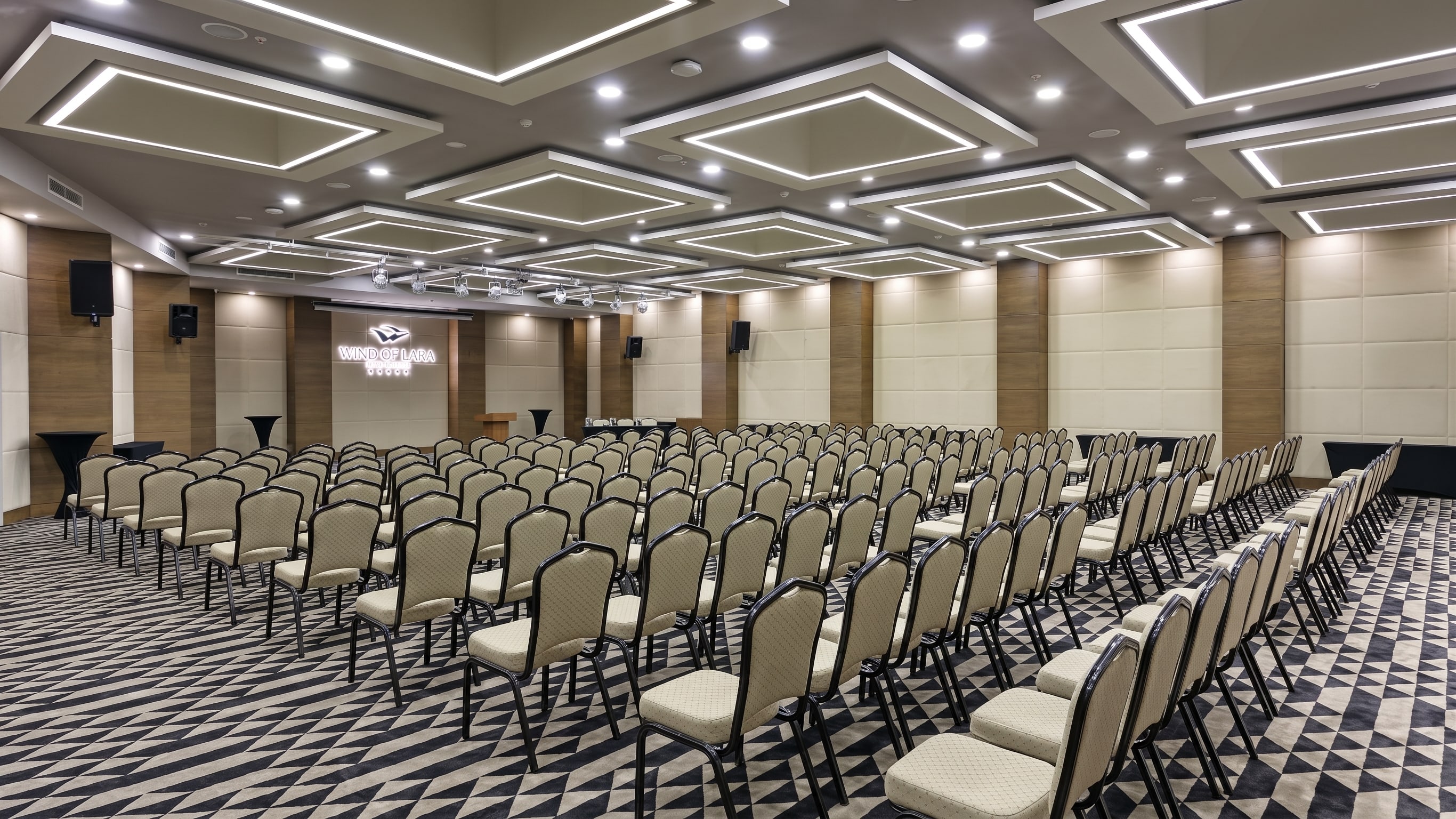
The capacity of a banquet hall is determined not by its square footage but by the layout you choose. The same 300 m² hall that seats 250 people in a theater arrangement drops to 150 when you switch to a round-table layout for a gala dinner. In this article we cover the four fundamental table layouts with real dimensions, alongside circulation and operational flow.
Capacity and Circulation Fundamentals for Banquet Hall Layout
Before moving on to each layout, fix two numbers: the net area per person and the circulation allowance.
- Theater layout: 0.8-1.0 m² per person
- Classroom layout: 1.5-1.8 m² per person (due to table depth)
- Round table (banquet): 1.5-2.0 m² per person
- U-shape: 1.8-2.3 m² per person
Roughly 30-40% of the gross hall area should be reserved for circulation, service aisles and technical zones. Main passage aisles should be at least 120 cm, aisles where service staff carry plates at least 90 cm, and the gap between tables planned so that 60 cm of movement clearance remains when a chair is pulled out. Reducing these allowances lengthens evacuation time and noticeably slows service.
Choosing folding banquet tables and stackable Hilton banquet chairs as your core equipment lets you reconfigure the same hall into a different layout within a few hours.
Theater and Classroom Layout: Presentation-Focused Events
The theater layout is the standard for seminars, conferences and presentations. Chairs are arranged in rows facing the stage, with no tables.
- Row spacing (back of chair to back of chair): 90-100 cm
- Leave a vertical aisle every 14-16 seats
- Add a horizontal cross-aisle after 10-12 rows
- Maintain a minimum 180 cm distance from the stage to the first row
The classroom layout is preferred for training sessions where participants need to take notes or use a laptop. Row tables are placed in front of the chairs.
- Table width per person: 60 cm
- Table depth: 45-50 cm
- Net clearance between rows: 75-90 cm
Both layouts call for stackable chairs; being able to collect 200 chairs and store them in 20 minutes after the event is the backbone of the operation.
U-Shape and Boardroom: Interactive Meetings
The U-shape is used for workshops and management meetings where instructor-participant interaction is high. Tables are arranged to form the letter U, with participants seated on the outside and the presenter at the open end.
- Ideal capacity: 12-25 people
- Seating width per person: 60-70 cm
- Inner width of the U at least 180 cm (so the presenter can move comfortably)
- Table depth: 45-60 cm
For groups exceeding 25 people the U-shape both complicates circulation and impairs the sightline of participants at the far ends; in that case it is better to switch to a double U or classroom layout. The boardroom (closed U) layout, where everyone gathers around a full table, suits decision-making meetings of 8-16 people. Because durability comes to the fore in these layouts, choose models with sturdy tops that can withstand people leaning on the table edges.
Round Table Layout: Galas, Weddings and Catered Events
When banquet hall layout comes to mind, the first thing people think of is the round-table arrangement, the standard for catered events. The table diameter directly determines the number of guests:
- 150 cm diameter: 8 people
- 180 cm diameter: 10 people
- 210 cm diameter: 12 people
Layout dimensions:
- Between table edges: at least 150 cm (service + a person passing through)
- Between table centers: diameter + 150 cm (e.g. a 330 cm axis spacing for a 180 cm table)
- From the back of a chair to the wall: minimum 90 cm
A 10-person table setup requires around 9-10 m². A gala for 200 people calls for 20 tables of 180 cm and, including circulation, roughly 350-400 m² of hall space. To speed up the service flow, arrange tables in lines parallel to the service aisles coming from the kitchen exit; a “ribbon” layout instead of a “chessboard” one shortens the distance a waiter has to cover. In hotel and banquet events, the hotel and banquet equipment range completes the setup with complementary items such as tablecloths, service trolleys and hot cabinets.
Integrating the Stage, Podium and Dance Floor
Fixed elements are positioned before the layout is built, because they determine the remaining area.
- Stage/podium height: 40 cm for the front rows, 60-100 cm in large halls; the sightline improves toward the back for every 60 cm of height
- Stage depth: min. 240 cm for a speaker, 400-600 cm for a band
- Dance floor: 30-40% of the guests dance at the same time; calculate 0.5 m² per person (about 30-40 m² of floor for a wedding of 200)
- Place the dance floor at the center of the hall or in front of the stage, where the tables can see it from an equal distance
For events that spill outdoors, separating the reception and cocktail section on the terrace and garden area with outdoor furniture relieves the circulation of the main hall.
Operational Flow and Setup Sequence
Setting up the layout correctly matters, but so does the speed of setup and changeover in determining the profitability of the operation.
- Fixed elements: stage, podium, dance floor, DJ/sound desk
- Framework: mark the axis lines of the tables on the floor (laser or tape)
- Tables: start from the corner farthest from the service aisle and work toward the exit
- Chairs: after the table layout is approved
- Service and decor: tablecloths, place settings and centerpieces last
Practical rules:
- The distance between the kitchen/service exit and the farthest table should not exceed 20 meters
- No table or chair should stand in front of emergency exits; keep the exit corridor an uninterrupted 120 cm
- For a layout changeover (e.g. from conference to dinner), the target time is 45-60 minutes for 200 people; this is only possible with stackable, lightweight equipment
- Draw a scaled layout plan for each event and share it with the service team
You can review the hall projects we have completed on our projects and references pages, and get in touch with us by creating a quote list for the table-and-chair combination suited to your own hall’s square footage and event type.