
Stackable Banquet Chairs: Benefits and Storage Guide
Discover the stacking height, transport trolley, storage savings and durability advantages of stackable banquet chairs. A practical guide for venue and hotel operators.
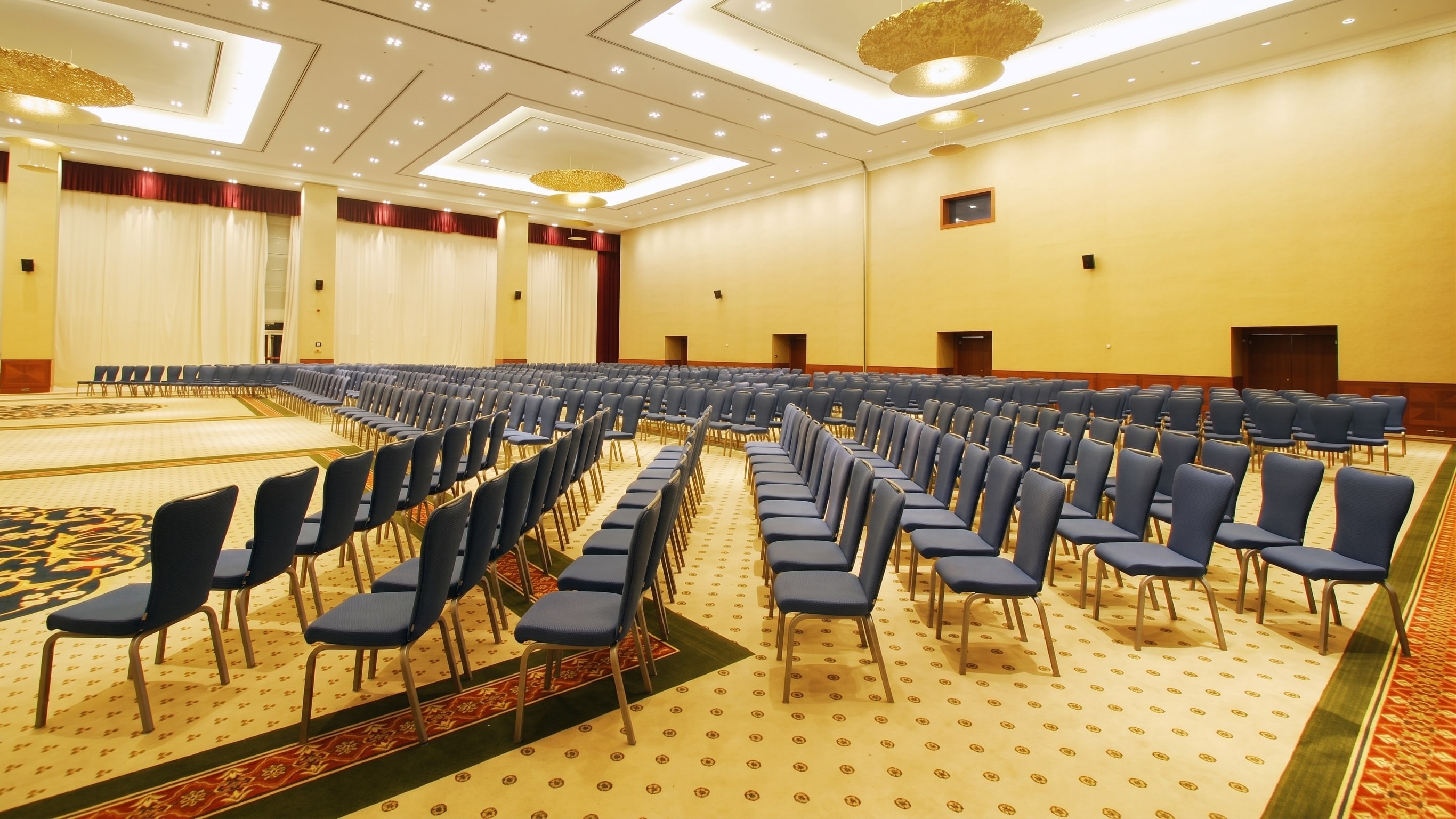
The difference between setting up a 500-guest wedding in a ballroom one evening and a 300-seat conference layout the next morning often comes down to how quickly the chairs can be cleared away and how little space they take up. The stackable chair is the piece of equipment at the centre of that cycle: chosen correctly, it directly lowers both your square-metre and labour costs.
Why Stackable Chairs Have Become Standard in B2B Operations
In venue, hotel, catering and convention-centre operations, a chair is not a fixed asset but a constantly moving inventory. A single space may be set up in 5-6 different seating layouts in one week. With non-stacking chairs, every layout change means both more staff hours and idle storage space.
Stackable banquet (Hilton) chair models solve this problem on three fronts:
- Vertical space use: Chairs stack from the floor upward, so your inventory is stored in the air rather than on the ground.
- Fast circulation: When a setup ends, the chairs are loaded onto a trolley and rolled into storage within minutes.
- Uniform inventory: When the same model is produced in hundreds of units, every stack is the same height and the same weight, which makes logistics predictable.
Stacking Height and Quantity Calculation
Stacking performance is not measured by a single figure; chairs per stack, total height and weight per stack must be assessed together.
For typical metal-frame banquet chairs, the practical figures are as follows:
- Chairs per stack: On sturdy steel-frame models, 10-12 chairs can safely stack on the floor.
- Single chair height: Approximately 88-92 cm.
- Height added per stacked chair: After the first chair, each chair adds about 5-6 cm to the stack. So a stack of 10 stays roughly at 90 cm + (9 × 6 cm) = around 144 cm; a height an adult can comfortably push.
- Floor footprint: A single stack of 10 chairs occupies only about 0.30 m² on the floor.
To make this concrete: if you arrange 300 chairs one by one, you need 60-70 m² including circulation allowances. The same 300 chairs, turned into 30 stacks of 10, come down to 10-12 m² including transport trolleys. For most businesses, that is an entire room that can be rented out or reassigned to another purpose.
When purchasing, ask the manufacturer in writing for the tested quantity per stack and the stack height. The label “stackable” alone is not a measurement.
The Transport Trolley: The Invisible Half of Stacking
The value of a stackable chair is incomplete without the trolley that carries it. Having staff carry chairs by hand is both slow and carries the risk of back injury and damage to walls and floors.
What to look for in a proper chair transport trolley:
- Capacity: A chassis that can carry 1 stack (10-12 chairs) at once, with a load limit of 150-200 kg.
- Wheels: At least two of them braked, with 4 swivel (castor) wheels; a polyurethane coating that runs quietly on hard floors.
- Width: A narrow body that fits through standard 80-90 cm doors and elevators.
- Protection: An edge barrier or rubber base to keep the chair legs from slipping.
A two-person team working with a trolley can collect 300 chairs and roll them into storage in 20-25 minutes. The same job by hand takes over an hour. In high season, when a venue runs several setups a day, this difference feeds directly into labour costs.
Storage Savings and Order
Storage is the most measurable return on the stackable chair, because square metres translate directly into rent and opportunity cost.
What to watch when planning storage:
- Stack limit: Do not exceed 10-12 chairs on the floor; higher stacks create both a tipping risk and upholstery pressure on the lower chairs.
- Ordering logic: If you keep the stacks on trolleys, sweeping the storage room and moving the chairs becomes a single operation.
- Moisture and flooring: Do not place metal-legged chairs directly on damp concrete; tiny rust stains can transfer to the upholstery. Storing them on a pallet or trolley solves this problem.
- Mixed inventory: Positioning banquet chairs vertically in the same area as your folding tables lets the setup crew collect the table-and-chair set from a single point.
In hotel ballrooms and multi-purpose halls, this arrangement makes setup time independent of the number of chairs: 200 chairs and 600 chairs are managed with the same systematic flow.
Setup Speed: A Comparison in Numbers
Setup speed is the stackable chair’s clearest contribution to operational profitability.
- From stack to row: A two-person team, taking chairs off the trolley and arranging them, can place 25-30 chairs per minute. A 300-chair hall is in seating order in 10-12 minutes.
- Layout change: Clearing the same hall and switching it to a different scheme is completed in roughly half the time compared with non-stacking chairs.
- Overnight readiness for setup: Because the stacks wait on the trolleys, the morning crew’s “empty the storage room” step disappears.
When this speed is planned together with all the other hotel and banquet equipment beyond the banquet chairs, it shortens the turnaround time between events and makes it possible to hold more events per day in the same space.
Durability: The Details That Keep Stacking Performance for Years
A chair being “stackable” does not mean it will withstand years of stacking. The real cost is a cheap model whose legs bend after two seasons so that the stack starts to wobble.
Production details to check for a long service life:
- Frame: Preferably steel profile with a wall thickness of 1.2 mm or more; thin tubes bow over time under the stack load.
- Weld points: Continuous, even welds at the leg-to-seat joints; these points bear the most strain in a stack.
- Powder coating / electrostatic finish: Provides protection against scratches and moisture, and withstands the friction that occurs while stacking in storage.
- Stacking buffers: On quality models, plastic/rubber buffers placed on the back and legs prevent the chairs from rubbing and scratching each other and keep the stack from slipping.
- Upholstery: For heavy use, a wipeable, stain-resistant fabric or synthetic leather; sewn rather than glued fastening should be preferred.
The same durability logic applies to choosing a wooden chair and outdoor furniture: the material should be selected according to the intensity of use, and outdoors, surfaces resistant to UV and moisture come to the fore.
When the right stacking height, a sturdy transport trolley and a genuinely durable frame come together, your chair inventory stops being a cost item and becomes a tool that speeds up your operation. To find the stackable chair model suited to your business’s capacity and usage intensity, you can create a quote list and get in touch with us.