
7 Critical Criteria for Choosing Hotel Furniture: Buying Guide
Choosing hotel furniture? We break down 7 critical criteria for procurement teams: durability, contract standards, upholstery, maintenance, supply and warranty.
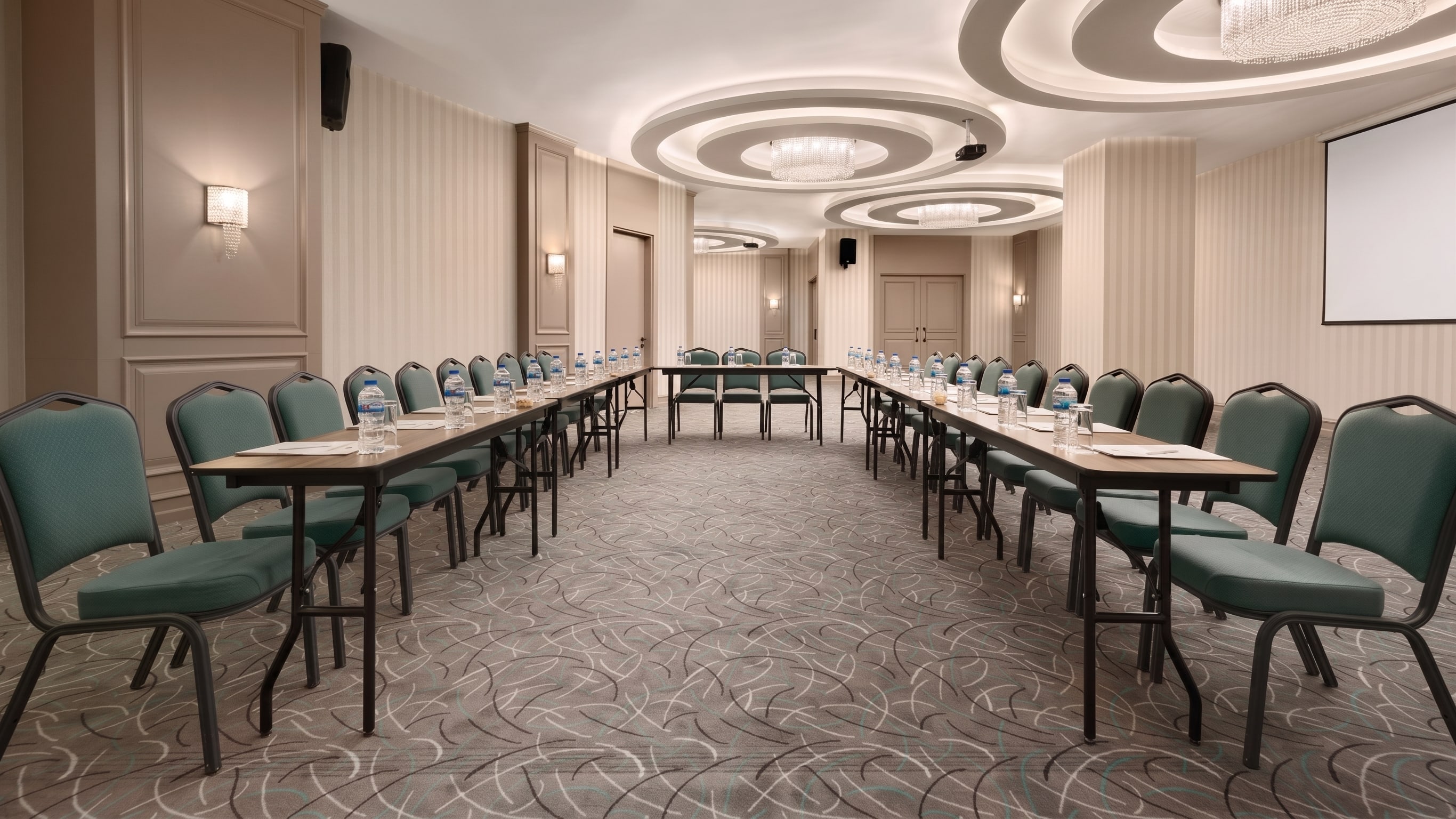
Choosing furniture for a hotel or event venue is a mistake with very different consequences than picking the wrong sofa for your living room. If a banquet chair that 200 people sit on and rise from every day starts squeaking within three months, the resulting service costs and reputational damage will be several times the price difference you paid up front. That is why selecting hotel furniture is an engineering and procurement decision before it is a design one. The 7 criteria below capture the questions procurement teams really need to ask when comparing quotes.
1. Durability and Load Testing: Look at the Numbers
In contract furniture, the word “sturdy” means nothing on its own. Demand these concrete figures:
- Static load test: Banquet chairs should have a load capacity of at least 110 kg; in quality production the test value rises to 150 kg and above.
- Tilt and cycle tests: A chair whose seat surface has undergone 100,000+ cycles of pressure testing points to a 5-7 year lifespan under heavy venue use.
- Stacking strength: Stacking banquet chairs 8-10 high requires resistance to frame deformation both during storage and transport.
In steel-frame products, the profile wall thickness (usually 1.2-1.5 mm) and the continuity of the weld joints are decisive. On stack-stored banquet Hilton chairs, non-slip caps on the leg tips protect the floor and reduce sideways tipping.
2. Contract Standards and Certification
The biggest difference between domestic furniture and contract (commercial) furniture is the standards that must be met. Add these to your purchasing specification:
- Fire retardancy: A BS 5852 or TSE-equivalent flame-retardancy certificate for upholstery fabrics is frequently requested in hotel licensing inspections.
- Hygiene and cleanability: Surfaces used in food and beverage areas must be made of wipeable, stain-resistant material.
- EN 16139 / EN 1728: These are the strength and durability standards for commercial seating furniture; ask whether the supplier has had testing carried out to these standards.
The phrase “contract quality” without certification is marketing language; the real proof is a test report.
3. Upholstery and Fabric Selection: The Martindale Value Is Decisive
In hotel furniture, upholstery is the fastest-wearing part of the product. When selecting fabric, look at the Martindale abrasion value:
- 25,000-40,000 rubs: Light use, individual armchairs in hotel rooms.
- 40,000-100,000 rubs: General contract use, lobby and restaurant.
- 100,000+ rubs: Busy banquet halls, chairs in constant rotation.
Alongside the fabric, the foam density of the upholstery (35-40 kg/m³ is the commercial standard) directly affects seating comfort and shape retention. Low-density foam collapses within the first six months. For synthetic leather (PU/PVC) options, hydrolysis resistance should be questioned, since it prevents the surface from flaking in humid environments.
4. Ease of Maintenance and Spare Part Continuity
Total cost of ownership depends far more on maintenance than on the purchase price. When evaluating:
- Removable upholstery: If the seat surface can be unscrewed, you replace a single panel instead of throwing away the whole chair.
- Standard fasteners: Bolts and leg caps that are not custom-made and are available on the market prevent supply problems in the long run.
- Spare part commitment: Get written confirmation that the manufacturer will keep producing the same model for at least 3-5 years. Otherwise, when 5 of your 50 chairs break, you are forced to replace the entire set.
On folding tables, the hinge and locking mechanism is the most critical maintenance point; being able to source these parts separately doubles the table’s lifespan.
5. Lead Time and Production Capacity
A hotel opening or pre-season refit is tightly bound to the calendar. In supply planning:
- Stock vs. made-to-order: Standard models are usually delivered within 2-4 weeks, while custom sizes and colors can extend to 6-8 weeks.
- Phased delivery option: On large projects, staged shipment of batches of 300-500 units lets you start assembly without locking up your warehouse.
- Capacity confirmation: Ask the manufacturer’s monthly production volume; a workshop that cannot complete a 1,000-unit order in 3 months puts your contract date at risk.
Tying the lead time to a late-delivery penalty clause in the contract is the most powerful tool a procurement team has.
6. Single-Source Production: Chair, Table and Equipment Compatibility
Buying the banquet chair from one company, the table from another, and the outdoor sets from a third complicates color matching, height compatibility, and warranty tracking. The concrete benefits of supply from a single manufacturer:
- Dimensional fit: The knee clearance between table height (usually 74-76 cm) and chair seat height (45-47 cm) stays standard.
- Color and texture consistency: Venue cohesion through the same paint batch and the same fabric supplier.
- A single point of contact: When a problem arises, you don’t deal with liability being passed between companies.
Sourcing your venue equipment, hotel and banquet equipment, and garden furniture for outdoor areas from the same supplier simplifies management for both logistics and warranty.
7. Warranty Scope and After-Sales Support
The scope of the warranty matters as much as its length. The clear questions to ask:
- Frame warranty: At least 2 years for steel/wood frames, 3-5 years in quality production.
- Upholstery and mechanism: These usually carry a separate, shorter scope; have them stated separately in the contract.
- On-site service or carry-in: There is a significant cost difference between hauling 200 chairs to a workshop and a technician coming to the site.
Clarify whether the warranty is limited to “manufacturing defects” or also covers normal usage wear. Reviewing references and completed projects where deliveries of a similar scale were made shows whether the warranty promise holds up in the field.
Summary: What Belongs in Your Comparison Table
When collecting quotes, lay these seven headings out in a single matrix: load test value, contract certificates, Martindale value, spare part commitment, delivery time, breadth of product range, and warranty scope. It is not the lowest-priced quote but the supplier that scores most evenly across these seven criteria that lowers your total five-year cost.
If you would like to finalize the right product combination and delivery schedule for your venue or hotel, share your needs list and contact us for a quote.