
Banquet Table Sizes and Seating Capacity Planning Guide
Banquet table sizes, how many people round and rectangular tables seat, capacity per square meter and a practical guide to table-and-chair layout planning.
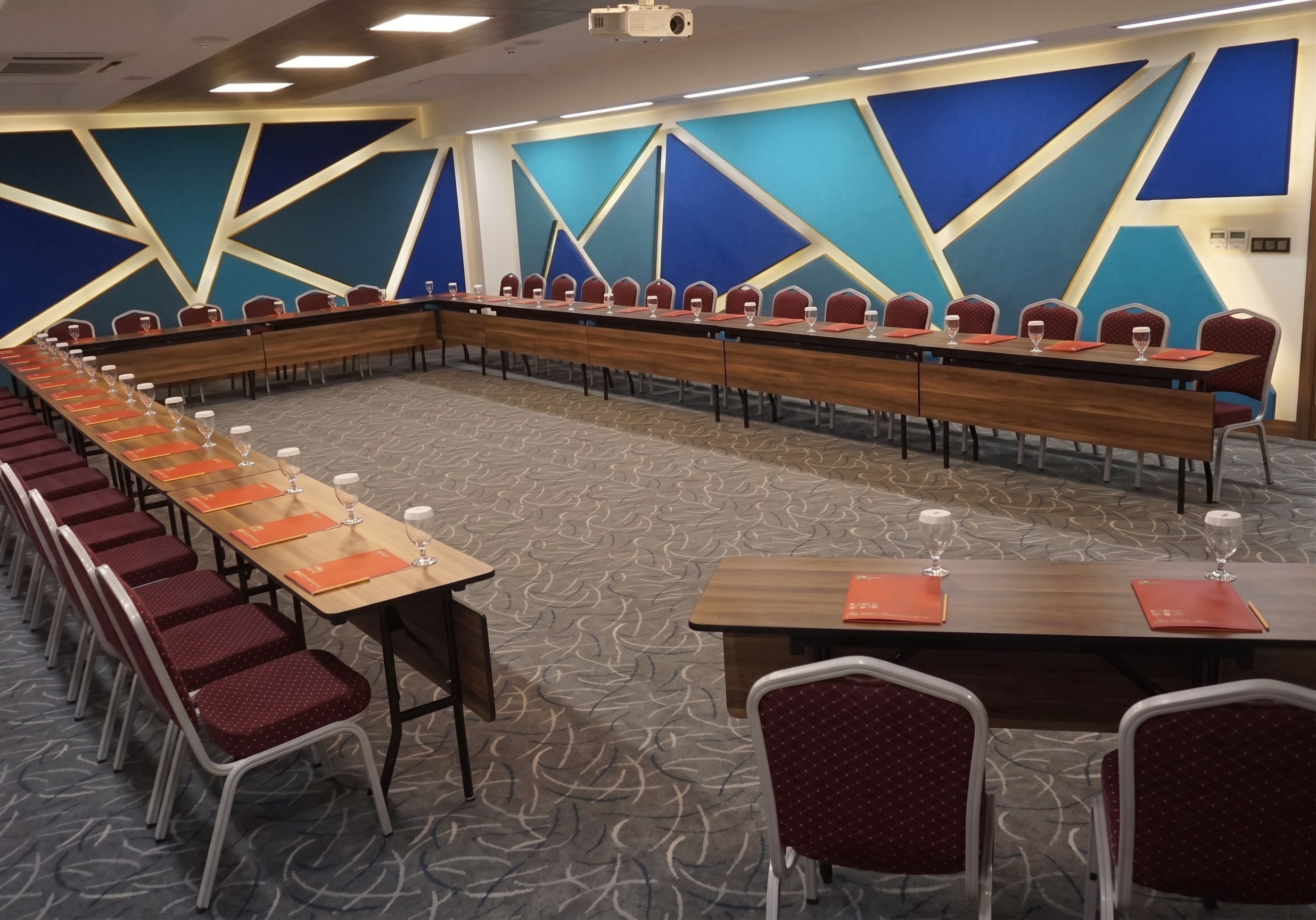
Why banquet table sizes are the foundation of hall planning
The real capacity of a hall is not determined by the number of chairs, but by the area the tables occupy and the circulation space between them. When the right banquet table sizes are not chosen, either guests feel cramped or the hall is used below its capacity. When purchasing and drawing up a seating plan, you need to consider two figures together: the net size of the table and how many people can sit comfortably around it.
All the figures below are based on the 60 cm of table edge per person that is the accepted standard in banquet and wedding service. For buffet-style or high-volume service, this allowance can be reduced to 50 cm, but elbow room then becomes tighter.
Round banquet table sizes and seating capacity
The round table is the most preferred form in wedding and gala halls, because it enables central conversation and keeps the service path clear. As the diameter grows, the circumference available per person increases.
- 120 cm diameter: 6 people (7 if tight)
- 150 cm diameter: 8 people (10 if tight)
- 180 cm diameter: 10 people (12 if tight)
- 210 cm diameter: 12 people (13 if tight)
A practical rule: the circumference (diameter x 3.14) divided by 60 gives the table’s comfortable capacity. For example, a 180 cm table has a circumference of 565 cm, which divided by 60 works out to roughly 9-10 people.
For round tables, the choice of tablecloth also depends on the size. A 180 cm table needs a 330 cm diameter cloth for a floor-length drop. Folding-base folding banquet table models in these diameters dramatically reduce the storage space required.
Rectangular banquet table sizes
The rectangular table makes efficient use of space for long head tables, conference dinners and narrow halls. The most common width is 76 cm; the length varies.
- 120 x 76 cm: 4 people (6 with the ends)
- 150 x 76 cm: 6 people
- 180 x 76 cm: 6-8 people
- 240 x 76 cm: 8-10 people
Several rectangular tables are joined end to end to form long banquet rows. If you place two tables side by side to get a width of 152 cm, you gain service from both sides and an arranging space in the middle. The decision whether or not to seat people at the ends directly affects capacity: on a 240 cm table, one person at each end is possible provided the per-person allowance is maintained.
How to calculate capacity per square meter
Hall capacity is calculated from the area allotted per person, which depends on the table type and seating density. Divide the net usable area (the area left after deducting stage, dance floor, buffet and entrance) by the values below:
- Round table + chair, spacious layout: 1.5-1.8 m² per person
- Round table, standard wedding: 1.2-1.4 m² per person
- Rectangular table, banquet rows: 1.0-1.2 m² per person
- Theater layout (no table, chairs only): 0.6-0.8 m² per person
Example: a hall with 300 m² of net area holds about 230 people in a standard wedding layout (1.3 m²/person). When 60 m² of the same hall is set aside for a dance floor and buffet, this figure drops to 185 people. That is why you should always base the per-square-meter calculation on the net service area.
Circulation and service allowances
The gap between tables is the most critical part of comfort:
- At least 45 cm between the back of one chair and the chair behind it
- At least 90-120 cm for the main aisle used by service staff
- At least 150 cm for aisles that require wheelchair access
Add these allowances to the table size: a 180 cm round table, together with its surrounding chairs and circulation allowance, occupies an area module of roughly 3.4 x 3.4 m.
Table-and-chair layout: which scheme goes where
The right layout determines both capacity and flow:
- Round island layout: Ideal for weddings and galas. The viewing angle to the stage is wide, and service reaches every table from four sides.
- Long banquet (imperial) layout: Used for protocol dinners and corporate events. Rectangular tables are joined end to end, which is visually striking.
- U or square layout: Preferred for meetings and training dinners where everyone needs to see one another.
- Mixed layout: A long head table in front of the stage, with round islands across the hall.
The chair choice is also part of the module. Stackable banquet Chiavari chair models can be stored 10-12 high, enabling flexible use of the hall. For hotel halls, evaluating the hotel and banquet equipment group from a single list, in order to plan tables, chairs, linens and arranging equipment together, speeds up purchasing.
Checklist when planning
Before finalizing your hall project, make these decisions:
- Event type: Which dominates — weddings, corporate dinners or conference dinners?
- Target capacity: Is maximum capacity the priority, or comfortable capacity?
- Net area: The m² remaining after subtracting the stage, dance floor and buffet.
- Table mix: Round only, or a mix that includes rectangular?
- Storage: Do the tables and chairs need to be folding/stackable?
The storage item is overlooked in most businesses; yet folding tables and stackable chairs are what make it possible to turn the hall from a meeting setup into a dinner one during the same day. For outdoor events, additionally plan the dimensions of outdoor garden furniture using the same capacity logic.
If you share your hall’s dimensions and your target number of guests, we can quickly prepare a tailored capacity recommendation for the right table mix and quantities via the quote list.